Tim Black
Đề này về economic growth cũng là anh em của đề khó hôm 11/2 nè.
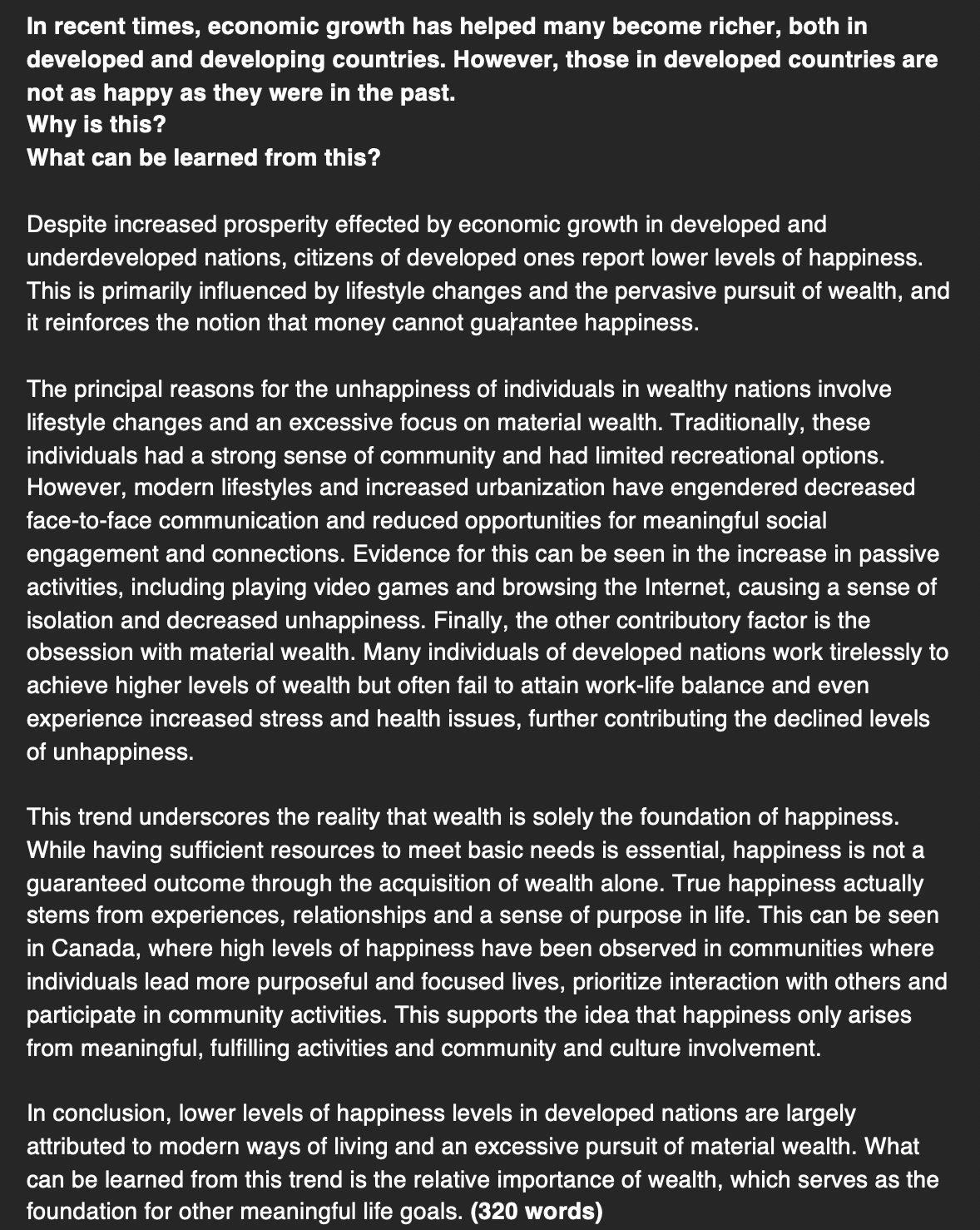
In recent times, economic growth has helped many become richer, both in developed and developing countries. However, those in developed countries are not as happy as they were in the past.
Why is this?
What can be learned from this?
Despite increased prosperity effected by economic growth in developed and underdeveloped nations, citizens of developed ones report lower levels of happiness. This is primarily influenced by lifestyle changes and the pervasive pursuit of wealth, and it reinforces the notion that money cannot guarantee happiness.
The principal reasons for the unhappiness of individuals in wealthy nations involve lifestyle changes and an excessive focus on material wealth. Traditionally, these individuals had a strong sense of community and had limited recreational options. However, modern lifestyles and increased urbanization have engendered decreased face-to-face communication and reduced opportunities for meaningful social engagement and connections. Evidence for this can be seen in the increase in passive activities, including playing video games and browsing the Internet, causing a sense of isolation and decreased unhappiness. Finally, the other contributory factor is the obsession with material wealth. Many individuals of developed nations work tirelessly to achieve higher levels of wealth but often fail to attain work-life balance and even experience increased stress and health issues, further contributing the declined levels of unhappiness.
This trend underscores the reality that wealth is solely the foundation of happiness. While having sufficient resources to meet basic needs is essential, happiness is not a guaranteed outcome through the acquisition of wealth alone. True happiness actually stems from experiences, relationships and a sense of purpose in life. This can be seen in Canada, where high levels of happiness have been observed in communities where individuals lead more purposeful and focused lives, prioritize interaction with others and participate in community activities. This supports the idea that happiness only arises from meaningful, fulfilling activities and community and culture involvement.
In conclusion, lower levels of happiness levels in developed nations are largely attributed to modern ways of living and an excessive pursuit of material wealth. What can be learned from this trend is the relative importance of wealth, which serves as the foundation for other meaningful life goals.
Comments (0)
No comments yet. Be the first!
Join the conversation
Log in to comment